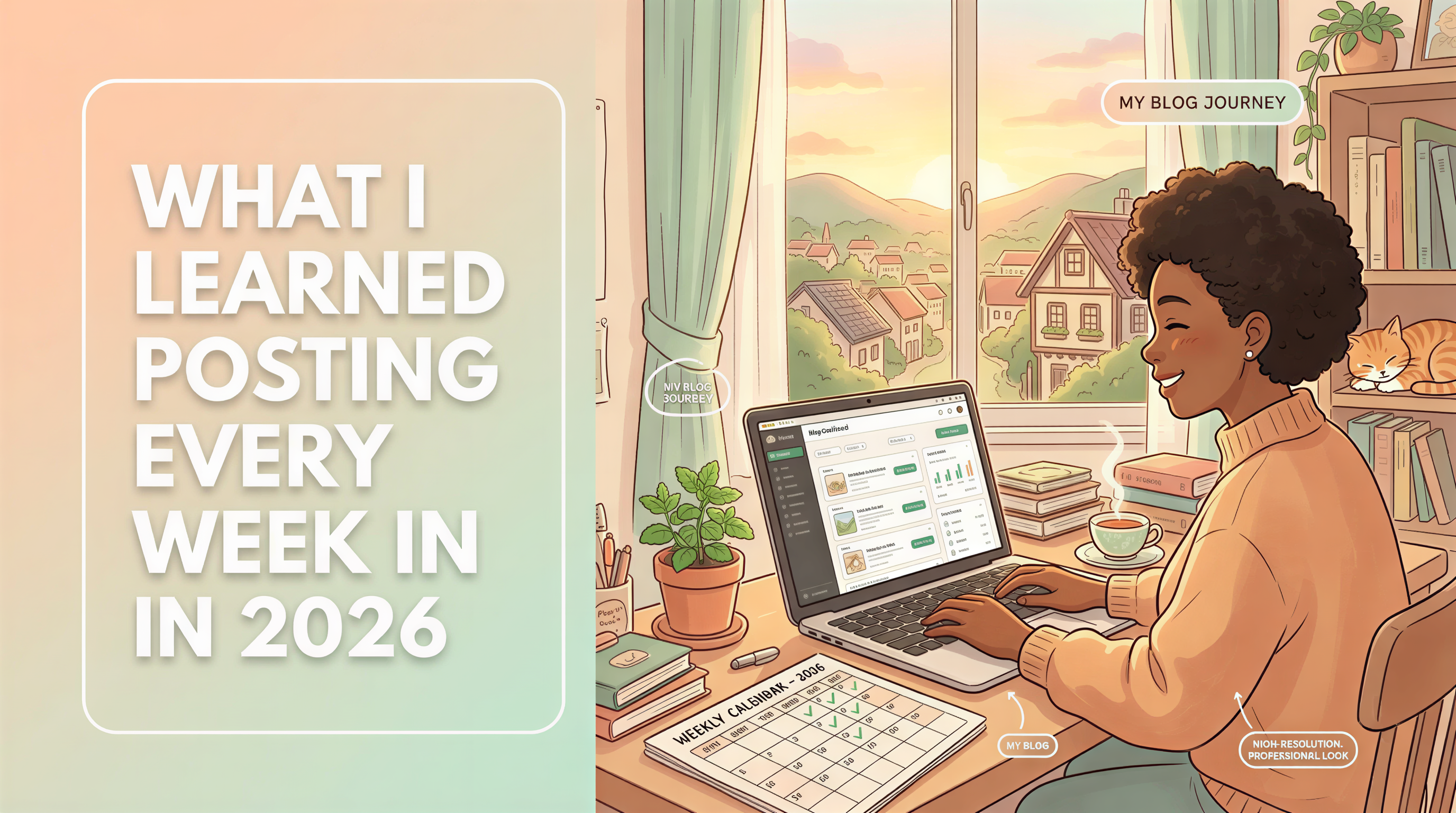
What I Learned Posting Every Week in 2026
Your kid's first phone is a bigger decision than you think.
Table of Contents
- The Headline
- What Actually Moved
- What Surprised Us
- What Flopped
- What I'd Do Differently
- Time Math (Honest Version)
- What Compounded
- Mental Models That Helped
- Where I'm Less Sure
- Cross-Link
- What I'm Doing in 2027
The Headline
Posting weekly didn't 10x our traffic.
It did roughly triple it - on a small base, so the absolute numbers are still modest. But the more interesting outcomes weren't traffic.

What Actually Moved
In rough order of impact:
1. Locked image style across every post
The single highest-leverage change. Reader recognition built up by month 3. Newsletter open rates climbed ~12% over the year, with the locked style doing most of the work.
(Yes, this is what we sell. Yes, we still mean it.)
2. Internal linking discipline
Adding 2-3 internal links per post turned out to do more for SEO than guest posting did. The compounding only kicks in around post 30.
3. Outline-then-draft
The 30-minute workflow (details) only works if you outline first. Skipping the outline added 30+ minutes of meandering per post.
4. Cross-posting with patience
We cross-posted to DEV.to, Medium, and Substack. Traffic from cross-posts was small in months 1-3 and meaningful by month 9.

What Surprised Us
Surprise 1: Tibo-tone landed
The conversational, short-paragraph style outperformed our previous formal tone by every readable metric we tracked. Time on page went up. Bounce went down. Shares went up.
Lesson: write like a person.
Surprise 2: The "boring" posts won
Our flashiest posts (trend pieces, hot takes) underperformed our utility posts (cheatsheets, sizes, comparisons). Boring usefulness compounds. Hot takes don't.
Surprise 3: AI search referrals showed up
By Q3, we started seeing referrals from AI search engines. Small but real. The pattern: posts with clear, structured H2 sections got cited; posts with rambling prose didn't.
Surprise 4: Old posts kept earning
Posts from January were still pulling traffic in December. Net new posts didn't beat compounding old ones. The content audit refresh we did in November earned more than 3 weeks of new posts.

What Flopped
Flop 1: The clever titles
Witty, ambiguous titles got fewer clicks than literal ones. Every. Single. Time.
Lesson: write the boring search-friendly title. Save the cleverness for the H1 if you want.
Flop 2: The "hot take" posts
Strong opinions about industry trends got engagement on Twitter and almost no organic search traffic. Twitter likes ≠ traffic.
Flop 3: The 5000-word "ultimate guides"
Took 8 hours to write. Got the same traffic as 1500-word focused posts. The leverage was in the focus, not the length.
Flop 4: The first attempt at video
Tried embedding video. Didn't move metrics. Stopped. Will revisit when we have more time and a clearer hypothesis.

What I'd Do Differently
If I were starting Jan 1 again:
- Lock the image style by week 2, not month 4
- Pick a search-friendly title format and stick with it
- Skip the "ultimate guide" until I had 30+ smaller posts feeding internal links
- Set up Search Console weekly checks from day 1
- Cross-post from week 1, not month 4

Time Math (Honest Version)
- Average time per post: ~45 minutes (down from ~3 hours at the start of the year)
- Total time on blog: ~40 hours over the year
- Total time on related image work: ~30 minutes total (locked style + tooling did the rest)
- Total time on cross-posting: ~5 hours
Total: ~45 hours of focused work for 50 posts. Roughly an hour per post end-to-end.
What Compounded
The compounding effects, ranked:
- Internal links between old and new posts
- Reader recognition of the locked image style
- Search rankings on borderline keywords (rank 11→7 was common)
- Newsletter list (slow weekly growth, sticky retention)
- Topic authority signals (Google seemed to trust us on a narrow topic by Q3)
Compounding is the whole point. None of it shows up in week 1.
Mental Models That Helped
A few framings that kept the year on track:
- "Boring on purpose" - skip cleverness, ship usefulness
- "Inventory, not announcements" - every post is a long-term asset, not a one-time event
- "Consistency beats intensity" - a Tuesday-every-week beat a "5 posts in one weekend then nothing"
- "Internal links are SEO compound interest" - the move that pays in year 2
Where I'm Less Sure
Honest uncertainty:
- AI search referrals: still a small share. Will it grow? Don't know.
- Long-form vs short-form: this year said short. Could change.
- Image style longevity: locked styles eventually need refreshing. When? Don't know yet.
Will revisit in next year's retrospective.
Cross-Link
Earlier related: The 30-Minute Blog Workflow (2026), Content Audit.
What I'm Doing in 2027
Same cadence (weekly), same locked style, same workflow. Adding:
- Two pillar pieces per quarter
- Newsletter-first content occasionally
- Search Console as a weekly habit (not monthly)
Not reinventing. Just compounding.
Postpix for the image step. Pricing when ready.
Generate Your First Blog Banner
Join thousands of content creators who save hours every week with AI-generated blog images.
Pay for credits when you need them. No monthly fees.
Use your credits whenever you need them. No rush.
Use images for any project—personal or commercial.