Visual Branding for Indie Hackers: Consistency on a Solo Stack
You're an indie hacker. You build, you market, you support, you write.
You don't have:
- A designer
- A brand book
- A six-week onboarding
- More than 30 minutes a week for design
You do have:
- A blog (sometimes)
- A landing page
- A Twitter / X presence
- A newsletter (probably)
Here's how to make all four feel like one product without hiring anyone.
Table of Contents
- What Visual Branding Actually Buys You
- The Three Locks
- The "Audit Yourself" Test
- The "Solo Brand Book" (One Notion Page)
- How to Pick Your Style
- Cross-Channel Application
- The "Don't Switch" Rule
- When to Refresh Your Brand
- What Happens When You Get This Right
- The Lazy Path That Still Works
- Cross-Link
- Set Up Your Three Locks This Saturday
What Visual Branding Actually Buys You
Consistency does three things:
- Recognition - readers who see your stuff repeatedly know it's you
- Trust - intentional design signals "this person knows what they're doing"
- Compounding - every post / page reinforces the next
What it doesn't buy:
- Beauty awards
- Design Twitter respect
- A novel visual identity
You're not trying to win a design competition. You're trying to be recognized.
The Three Locks
If you do nothing else:
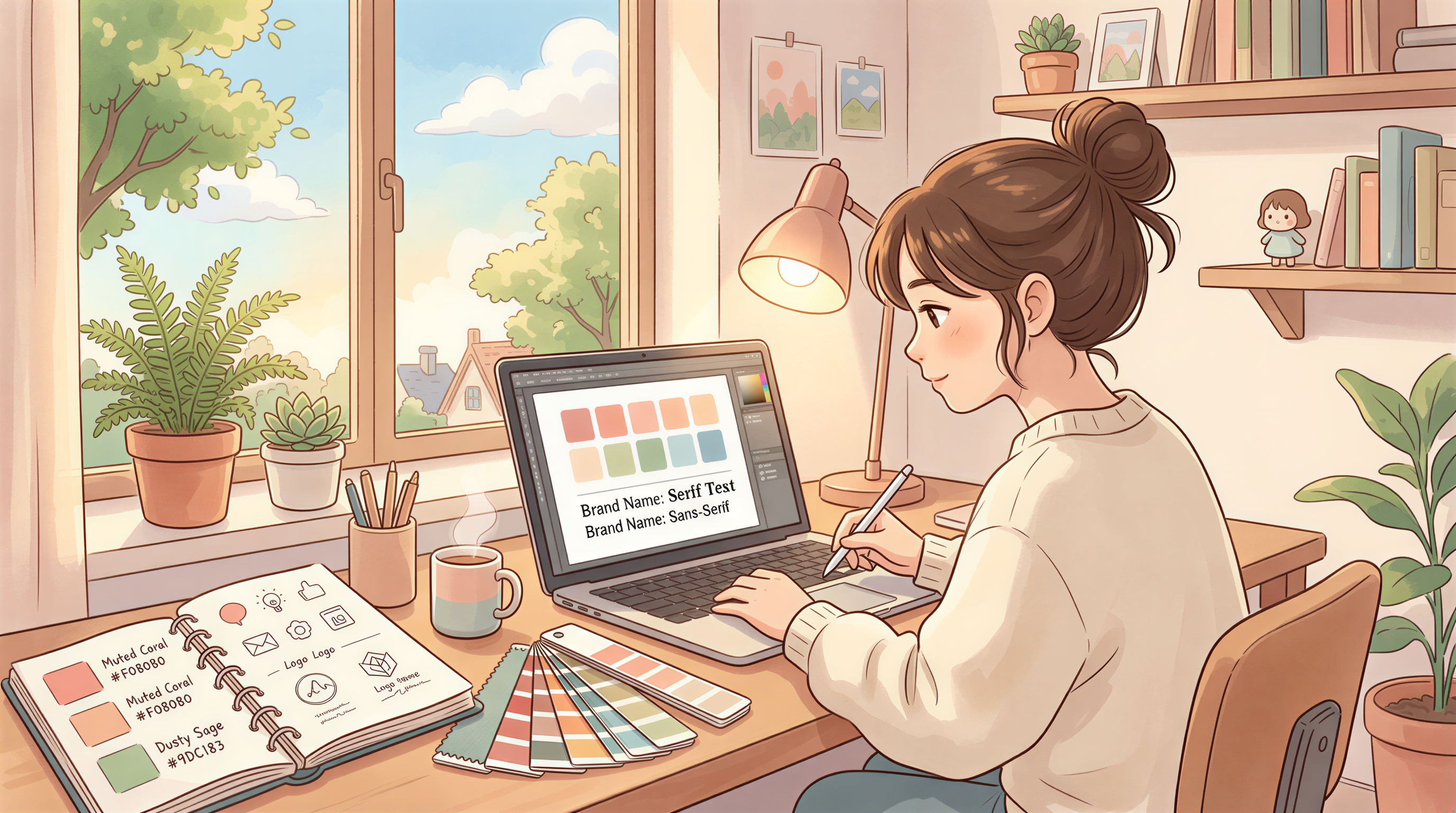
- Lock one color (a primary hex code)
- Lock one image style (options)
- Lock one font (or a max of two: heading + body)
Every channel uses these. Every post. Every email. Every screenshot. Every tweet header.
The "Audit Yourself" Test
Open three of your channels side by side:
- Your landing page
- Your latest blog post
- Your newsletter
Do they feel like the same brand? Or do they feel like three different operations?
If it's the second, you're doing extra work without the recognition payoff.
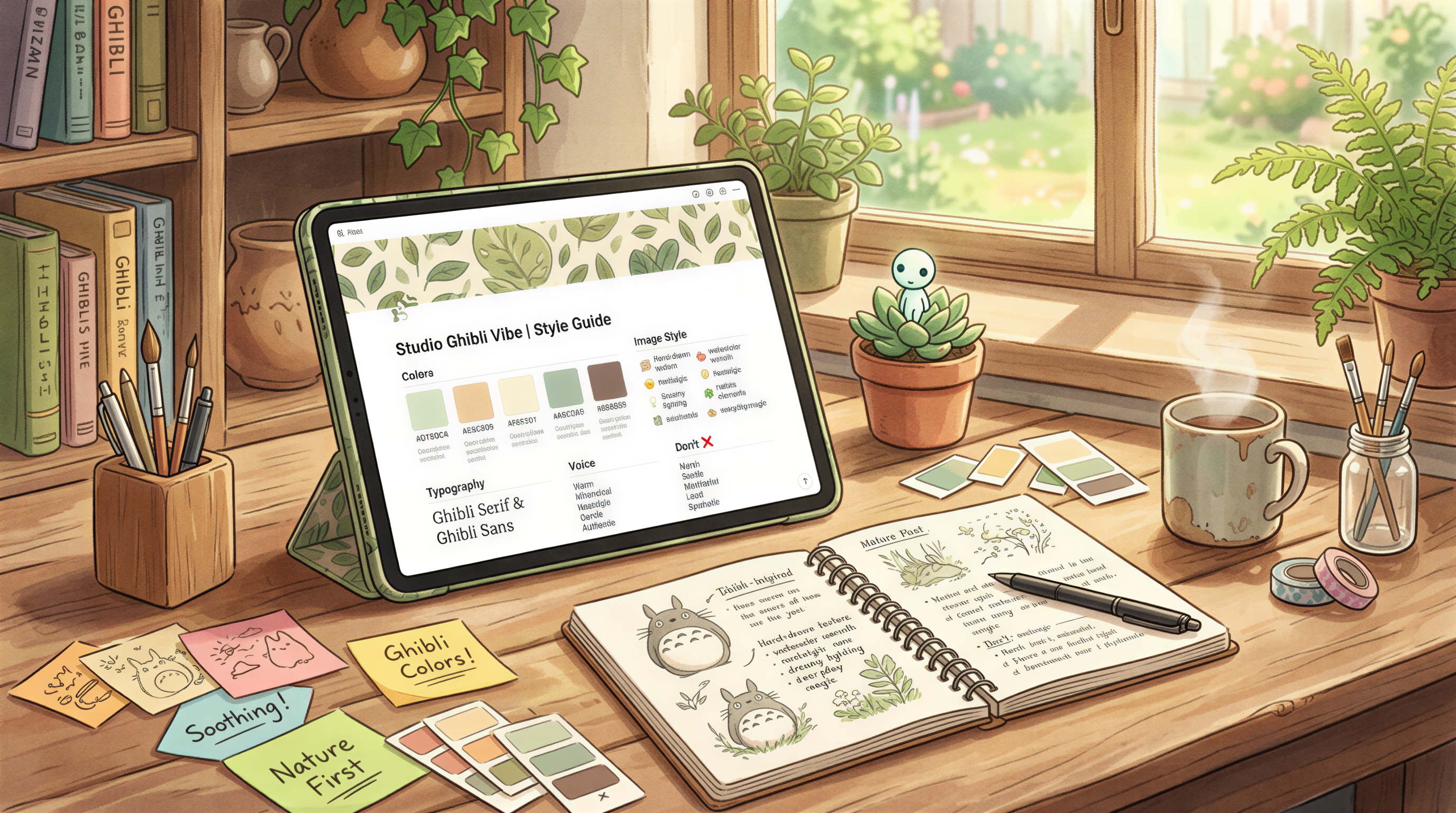
The "Solo Brand Book" (One Notion Page)
Don't write a 60-page brand book. Write one Notion page:
That's the entire brand book. Bookmark it. Reference it weekly.
How to Pick Your Style
Three questions:
- Who's your audience? (devs / creators / consumers)
- What's the product feeling? (calm / urgent / playful)
- What can you ship consistently? (= what feels effortless to generate)
The third matters most. Pick a style you can ship without thinking. Otherwise you'll abandon it on a busy week.
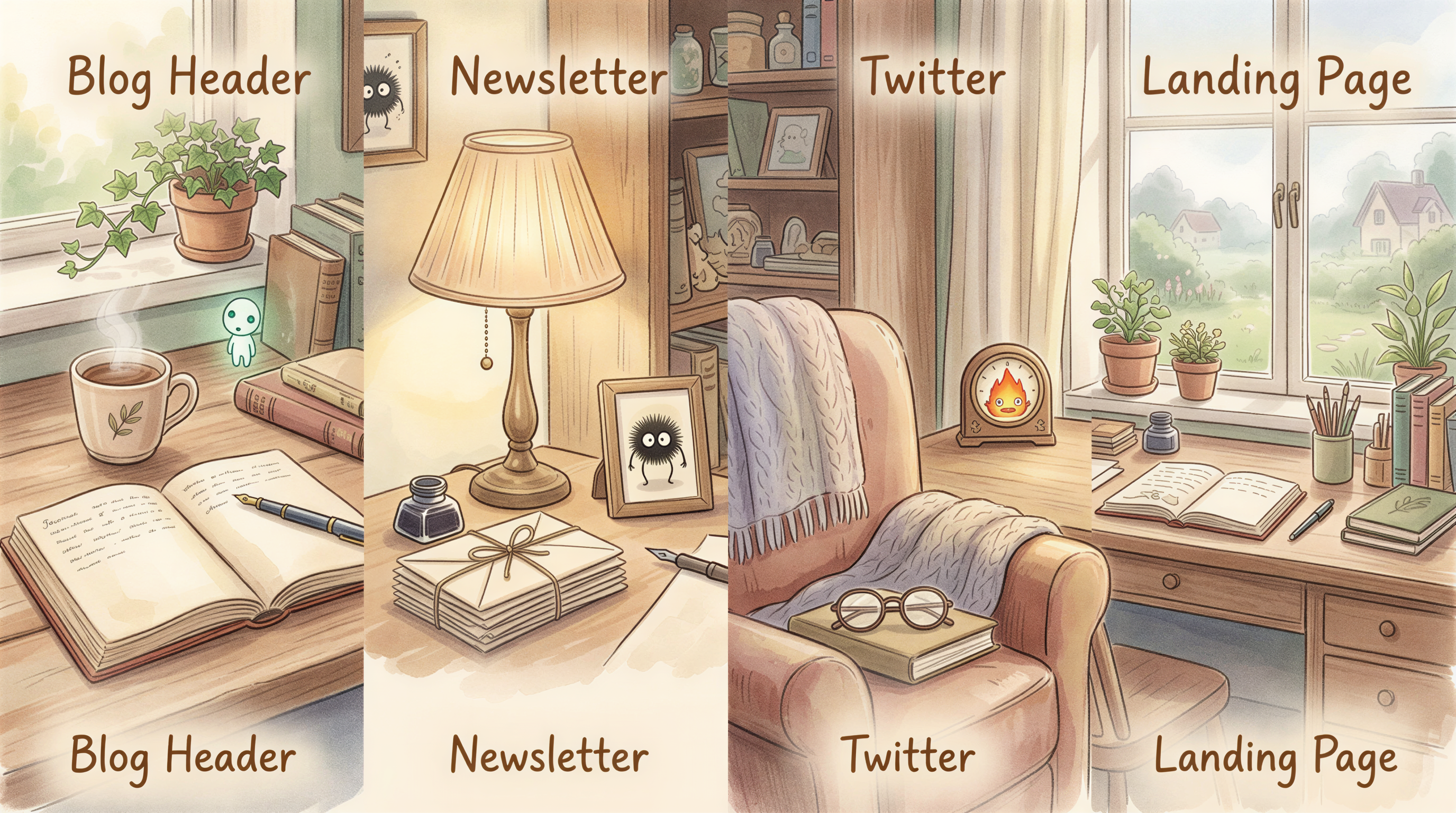
Cross-Channel Application
Once locked:
Blog headers
Postpix with your saved style snippet.
Newsletter
Same image style as blog. Subscribers see the connection.
Twitter / X
Header image in the same style. Tweet card images (when you make them) in the same style.
Landing page hero
Don't reinvent here. Same style language. Your hero illustration could literally come from the same generator with a different prompt.
Product screenshots
These are the wild card - product UI is what it is. But the screenshot framing (background color, border, shadow) can match the brand colors. Small touch, big payoff.
The "Don't Switch" Rule
Hardest part of this whole system: not switching.
You will be tempted to:
- Try a new style "just for this post"
- Adopt a trend you saw on Twitter
- Refresh your colors when you get bored
Don't. Reader recognition needs minimum 6 months of consistency before it kicks in.
If you must change, change everything at once (a rebrand event), not piecemeal.
When to Refresh Your Brand
Legitimate triggers:
- Major product pivot (new audience, new positioning)
- 12+ months in current style and metrics suggest fatigue
- A real designer is finally available to upgrade everything
Bad triggers:
- "I'm bored"
- "Saw something cool on Dribbble"
- "Just got a new tool"
What Happens When You Get This Right
Compounding effects:
- Repeat readers identify your work in 0.5 seconds in their feed
- Your blog posts feel like they belong to a publication, not a notebook
- Your newsletter retention climbs
- Your product page conversion lifts (subtly)
None of these happen in week 1. They show up in months 3-6.
The Lazy Path That Still Works
If you can't even commit to a real style:
- Pick one color
- Use one image generator with one default style
- Use system fonts everywhere
That alone puts you ahead of 80% of indie hackers.
Cross-Link
Earlier post: Indie Hacker Visual Branding - the foundational version.
This one is the "consistency across channels" cut.
Set Up Your Three Locks This Saturday
90 minutes:
- Pick the color
- Pick the image style + write the snippet
- Pick the font(s)
- Document in one Notion page
Apply to next week's blog post + newsletter. Hold for 6 months.
Postpix. Pricing when committed.
Generate Your First Blog Banner
Join thousands of content creators who save hours every week with AI-generated blog images.
Pay for credits when you need them. No monthly fees.
Use your credits whenever you need them. No rush.
Use images for any project—personal or commercial.